




A: FSMA Section 11.5.5.1 simply states that compressed air contacting food must be "clean and present no risk to food safety." FSMA 11.5.5.2 requires that systems be "maintained and regularly monitored for quality." This means annual (minimum) testing is mandatory, documentation must be maintained, and results must show air quality appropriate to your product. Most beverage and ice manufacturers test semi-annually or quarterly. Master Pneumatic recommends ISO 8573 Class 2 as the baseline, with Class 1 for dry-ice and ultra-sensitive applications. The FDA doesn't specify which ISO class to use—that's the food manufacturer's responsibility based on their product and risk assessment.
Why Air and Gas Quality Control Is Critical for Food & Beverage Operations
Food and beverage manufacturing operates under some of the strictest regulatory oversight of any industry. The FDA's Food Safety Modernization Act (FSMA), supported by NSF/ANSI standards, mandates that any compressed air or gas touching food or food-contact surfaces must be clean and pose no risk to food safety. This seemingly simple requirement demands sophisticated air preparation and continuous monitoring.
Contaminated compressed air creates cascading product safety and quality challenges:
- Product Contamination Risk: The FDA explicitly requires (21 CFR 110.40) that "compressed air or other gases mechanically introduced into food or used to clean food-contact surfaces or equipment shall be treated in such a way that food is not contaminated with unlawful indirect food additives." Oil, water, and particulate contamination in compressed air violates this requirement and creates potential liability for food recalls and regulatory action.
- Carbonation and Dispensing Inconsistency: Beverage carbonation depends on precise pressure control. Unstable or contaminated air compromises the CO₂ blend in draught beer systems, resulting in flat beer, inconsistent head formation, and customer complaints. In carbonated soft drink lines, pressure variations cause fill inconsistency—some bottles over-filled, others under-filled—creating product waste, quality variance, and customer dissatisfaction.
- Ice Production Equipment Failure: Both traditional ice and dry-ice production rely on pneumatic actuators and control systems. Water or oil contamination causes valve sticking, actuator sluggishness, and equipment shutdowns. In ice manufacturing operating 24/7, contamination-related downtime can cost thousands per hour in lost production.
- Cleaning System Reliability: Food production facilities require dry-ice and other pneumatic cleaning systems to meet FDA sanitation requirements. Moisture in these systems interferes with dry-ice formation, causing equipment failure exactly when cleaning is needed.
- Processing Line Disruption: Food and beverage processing lines depend on pneumatic actuators for conveyor control, product handling, and packaging. Contaminated air causes sluggish valve response, unpredictable actuator performance, and line stoppages—disrupting production schedules and creating food safety risks from product exposure.
- Equipment Wear and Maintenance Cost: Traditional mist lubrication over-oils pneumatic equipment, creating varnish buildup that reduces component life 50-75% and increases maintenance costs. Conversely, insufficient lubrication accelerates bearing wear and causes premature failure.
- Master Pneumatics’ integrated approach to air preparation—combining multi-stage filtration, precision regulation, and controlled lubrication—ensures that food and beverage operations maintain the clean, dry, stable, properly-lubricated compressed air and gas that product safety, consistency, and regulatory compliance demand.
Food & Beverage Industry Applications Master Pneumatic Supports
-
Bulk CO₂ Storage and Distribution Systems
The carbonated beverage industry depends entirely on reliable CO₂ systems. From syrup mixers in soft drink plants to draught beer systems in breweries and bars, bulk CO₂ storage and distribution must deliver consistent gas quality and pressure.
Critical Requirements:
- Pressure stability: CO₂ regulators must maintain precise outlet pressure (typically 50-60 PSI for draught beer, 80-90 PSI for carbonated soft drinks) despite inlet pressure variations and flow demand changes
- Purity: Water and oil contamination can clog regulators, cause freeze-up (CO₂ can freeze at low pressures, blocking flow entirely), and introduce contaminants into beverages
- Flow consistency: Inconsistent CO₂ pressure translates directly to product inconsistency—flat beer, poor foam head, uneven carbonation
Federal Standards:
- FDA 21 CFR 110.40: Compressed gas introduced into food must be clean and pose no risk to food safety
- FSMA 11.5.5.1-11.5.5.2: Compressed air/gas contacting food must be clean; systems must be regularly monitored for quality
- NSF/ANSI 51: Food equipment materials standards requiring non-leaching, corrosion-resistant components
- ISO 8573-1:2010: Most beverage CO₂ systems require Class 2-3 air quality(particles ≤4-6 microns, dew point ≤-25°C to -40°C, oil ≤0.1-0.5 mg/m³)
Master Pneumatics’ CO₂ distribution solutions include:
- Precision CO₂ regulators engineered specifically for beverage applications, maintaining ±2 PSI pressure stability across full flow ranges
- Coalescing filters removing water vapor that causes CO₂ freeze-up, and regulators block
- Stainless steel and food-contact materials ensuring no contaminant leaching into beverages
- Integral check valves preventing back-flow that can introduce contaminants
Beverage producers report that Master Pneumatic CO₂ systems eliminate pressure-related dispensing inconsistency, reduce equipment downtime 60-80%, and ensure regulatory compliance during FDA facility audits.
-
Nitrogen Blending and Protective Atmosphere Systems
Nitrogen serves multiple critical functions in food and beverage operations, from modified atmosphere packaging (MAP) to liquid food handling and fire suppression.
- Modified atmosphere packaging (MAP): Nitrogen displaces oxygen in food packaging, extending shelf life and preventing oxidation
- Pressure control in liquid food handling: Nitrogen blankets protect flavor and prevent oxidation in wine, juice, and specialty beverages
- Pneumatic actuator control: Nitrogen powers packaging machines and product handling systems
- Fire suppression in brewing: Nitrogen creates inert atmospheres in fermentation vessels and storage tanks
-
Ice and Dry-Ice Production Equipment
Ice manufacturing—whether traditional ice cubes for beverage service or dry-ice for industrial cooling and cleaning—represents a specialized food-contact application requiring ultra-pure air.
Traditional ice makers spray water into freezing chambers, using pneumatic actuators to control water spray patterns and ice ejection.
Dry-ice production converts liquid CO₂ into solid pellets or blocks through rapid expansion and cooling, providing chemical-free sanitization for food facilities.
-
Draught Beer Systems and Beverage Dispensing
Draught beer represents a specialized beverage dispensing application with unique pneumatic requirements, utilizing nitrogen/CO₂ blended gas.
Critical Draught Beer Requirements:
- Pressure precision: ±2 PSI variation can noticeably affect head formation and foam stability
- Gas purity: Water or oil contamination "spoils" the gas, resulting in flat beer or off-flavors
- Flow consistency: An Inconsistent CO₂/nitrogen blend creates an inconsistent product across multiple taps
-
Food and Beverage Processing Line Automation
Modern food and beverage production lines depend entirely on pneumatic automation—conveyor control, product handling, filling systems, capping machines, and packaging equipment.
Processing Line Pneumatic Requirements:
- Clean air prevents actuator sluggishness and valve sticking in moisture-heavy production areas
- Dry air prevents freeze-up in refrigerated production areas
- Controlled lubrication extends actuator and valve service life in extreme temperatures
-
Gas Blending Systems and Specialty Applications
Food and beverage operations increasingly employ specialty gas applications requiring precise gas mixing and pressure control with multiple gas streams (CO₂, nitrogen, oxygen, argon).
Critical Regulatory Standards and Compliance
Food and beverage operations must meet stringent regulatory standards. Master Pneumatics’ products are designed to support compliance with:
- FDA Food Safety Modernization Act (FSMA) Requirements
- ISO 8573-1:2010 Compressed Air Quality Standard
- NSF/ANSI Standards for Food Equipment and Materials
- Safe Quality Food (SQF) Institute Requirements
- British Compressed Air Society (BCAS) Food Grade Best Practices
FDA Food Safety Modernization Act (FSMA) Requirements
The Food Safety Modernization Act fundamentally changed food facility requirements, shifting from reactive compliance to preventive controls.
FSMA 21 CFR 117.11.5.5 - Compressed Air and Gas Standards:
- 11.5.5.1: "Compressed air or other gases (e.g., nitrogen, carbon dioxide) that contact food or food contact surfaces shall be clean and present no risk to food safety."
- 11.5.5.2: "Compressed air systems and systems used to store or dispense other gases that come into contact with food or food contact surfaces shall be maintained and regularly monitored for quality and applicable food safety hazards. The frequency of analysis shall be risk-based and at a minimum annually."
What This Means: FSMA places responsibility on food facility operators to verify that compressed air systems maintain safe quality. Annual testing is the minimum baseline; many facilities test quarterly or semi-annually.
Master Pneumatic supports FSMA compliance by:
- Providing documented air quality certifications for all components
- Recommending ISO 8573 Class 2 or better air quality
- Supplying systems designed for routine monitoring
- Offering documentation packages for FDA audits

ISO 8573-1:2010 Compressed Air Quality Standard
ISO 8573-1 is the international standard defining air purity classes. For food and beverage applications, most operations require Class 2 or 3, with specialty applications (dry-ice systems) requiring Class 1.
| Quality Class | Particles | Dew Point | Oil Content |
|---|---|---|---|
| Class 1 | ≤1 μm | ≤-40°C | ≤0.001 mg/m³ |
| Class 2 | ≤4 μm | ≤-40°C (or -25°C) | ≤0.1 mg/m³ |
| Class 3 | ≤6 μm | ≤-25°C | ≤0.5 mg/m³ |
Recommended Classes by Application:
- Draught beer systems: Class 2
- Soft drink carbonation: Class 2
- Ice production: Class 2
- Dry-ice systems: Class 1 (preferred)
- Processing line actuators: Class 3
Master Pneumatics’ multi-stage systems reliably deliver Class 2 air quality through:
- 5-micron general-purpose filtration (removes particles and gross water)
- 0.3-micron coalescing filtration (removes oil and final water droplets)
- Optional desiccant dryers (removes water vapor to Class 2 dew point)
NSF/ANSI Standards for Food Equipment and Materials
NSF/ANSI 51:2023 establishes material and construction requirements for food equipment components. All Master Pneumatic components contacting food or food-contact surfaces must meet NSF/ANSI 51 certification, ensuring:
- No leaching of toxic substances into food
- Corrosion resistance in wet food environments
- Cleanability for sanitation protocols
- Chemical compatibility with food, cleaning agents, and processing aids
NSF Certification Significance: NSF/ANSI 51 certification means that materials have been independently tested and verified not to impart harmful substances to food. Master Pneumatic utilizes NSF/ANSI 51-certified materials in all food-contact components.

Safe Quality Food (SQF) Institute Requirements
SQF Code Level 2 and 3 (used by food manufacturers and retailers) specifically mandate:
- "Compressed air used in the manufacturing process shall be regularly monitored for purity."
- Air quality testing minimum of twice per year (or based on risk assessment)
- Testing is required whenever maintenance occurs that could affect system integrity
Master Pneumatic systems are specified in SQF compliance programs, with documentation supporting the twice-annual (or more frequent) testing requirement.

British Compressed Air Society (BCAS) Food Grade Best Practices
BCAS Food and Beverage Grade Compressed Air Best Practice Guideline 102 specifies:
- Direct product contact: ISO 8573-1:2010 [2:2:1] or better
- Indirect contact (food-contact surfaces): ISO 8573-1:2010 [2:4:2]
- Testing frequency: Minimum twice per year + whenever maintenance occurs
- Documentation: All test results are maintained for the audit trail
This guideline represents industry best practices adopted by leading beverage and food manufacturers globally.
Master Pneumatics’ Featured Food & Beverage Solutions

The Complete CO₂ Beverage Distribution System
Master Pneumatic delivers integrated CO₂ distribution solutions for beverage manufacturing, combining precision regulation, monitoring, and food-safe materials:
System Components:
- Bulk CO₂ Filter-Regulator Combinations: Multi-stage systems accepting high-pressure CO₂ from bulk tanks (typically 500-1000 PSI) and reducing to precise beverage dispensing pressures (50-90 PSI depending on application)
- Primary Pressure Regulation: Reduces bulk tank pressure to intermediate distribution pressure (typically 100-150 PSI), maintaining ±5 PSI stability
- Secondary Fine Regulation: Reduces intermediate pressure to final beverage-specific pressure, with ±2 PSI control precision
- Moisture Removal: Coalescing filters and optional desiccant dryers remove water that causes regulator freeze-up and CO₂ blockage
- Check Valves: Preventing back-flow that could allow air or moisture to enter the system
- Monitoring and Documentation: Optional pressure gauges and moisture sensors providing data for FDA/FSMA compliance verification
This integrated approach delivers beverage producers consistent product quality shift-to-shift, eliminates pressure-related dispensing variance, and ensures regulatory compliance documentation.

Dual-Gas Draught System Regulators
Master Pneumatics’ specialized dual-port draught regulators control both CO₂ and nitrogen simultaneously:
- Independent control: Separate regulator knobs for CO₂ and nitrogen, enabling precise gas blend adjustment
- Pressure precision: ±1 PSI stability maintaining consistent head formation and beer characteristics
- Stainless steel construction: Resisting corrosion from bar environment exposure
- Temperature compensation: Maintaining pressure stability from ale cooler (35°F) to warm gas lines (75°F)
- Integral check valves: Preventing gas back-flow that would degrade blend consistency
Draught beer specialists report that these regulators eliminate inconsistent foam and flavor issues, improve operator ability to adjust for different beer styles, and reduce gas waste through precision control.

Dry-Ice System Air Preparation
Master Pneumatics’ ultra-pure air preparation for dry-ice systems delivers:
- Desiccant dryer systems: Molecular sieve or activated carbon dryers achieving ISO Class 1 dew point (≤-40°C)
- 0.01-micron coalescing filters: Ultra-fine filtration removing particles and oil aerosol
- Pressure regulation: Precise control for dry-ice expansion characteristics
- Food-contact materials: All NSF/ANSI 51 certified components
Dry-ice cleaning contractors report that Master Pneumatic systems eliminate equipment freeze-up, improve cleaning consistency, and reduce maintenance downtime 60-80% compared to standard air preparation.

Precision Lubrication for Processing Line Equipment
Master Pneumatics’ Serv-Oil precision lubrication systems revolutionize processing line maintenance:
Traditional Mist Lubrication Problems:
- Over-lubrication creates varnish buildup, reducing actuator life 50-75%
- Excessive oil causes sluggish valve response, disrupting production timing
- 50-90% of lubricant exits through exhaust, creating environmental issues
Serv-Oil Precision Injection Benefits:
- Controlled oil metering: Delivers exact lubrication amount components require
- Extended equipment life: 2.5-3x longer service life compared to mist-lubricated equipment
- Improved production consistency: Eliminates sluggish valve and actuator response
- Reduced maintenance: 50-90% fewer lubrication-related repairs
- Environmental compliance: Minimal oil aerosol emissions
Food and beverage manufacturers report that converting to Serv-Oil systems extends processing line equipment life from 3-5 years to 8-12 years, reduces maintenance costs substantially, and improves production line reliability.
Why Food & Beverage Professionals Choose Master Pneumatic
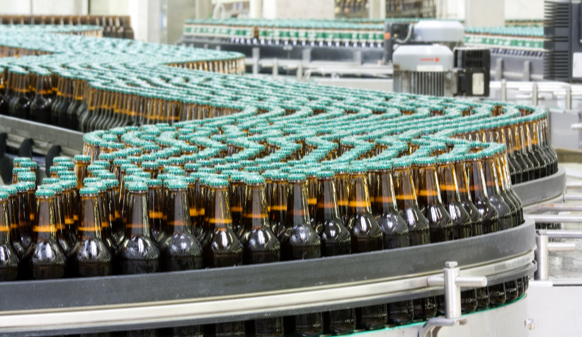
75+ Years of Food & Beverage Industry Expertise
Master Pneumatic has served the food and beverage industry since the 1940s, building deep expertise in:
- Beverage carbonation and CO₂ distribution systems
- Draught beer equipment and nitrogen blending
- Ice manufacturing and dry-ice equipment
- FDA and FSMA compliance requirements
- NSF/ANSI certification and documentation
This heritage provides food and beverage professionals with proven solutions addressing real operational challenges.
Engineered Reliability for Food Production Demands
Food production operates under unforgiving constraints:
- 24/7 operation with minimal downtime tolerance
- High-volume production with zero quality variance allowance
- Regulatory compliance requirements with serious financial penalties for violations
- Equipment uptime directly translates to product availability and customer satisfaction
Master Pneumatic products are engineered for this demanding environment:
- Pressure-tested assemblies ensuring zero leaks
- NSF/ANSI 51 certification of all food-contact components
- Material specifications optimized for food processing environments
- Extensive validation with major beverage and food manufacturers
- Documentation packages supporting FDA and FSMA audits
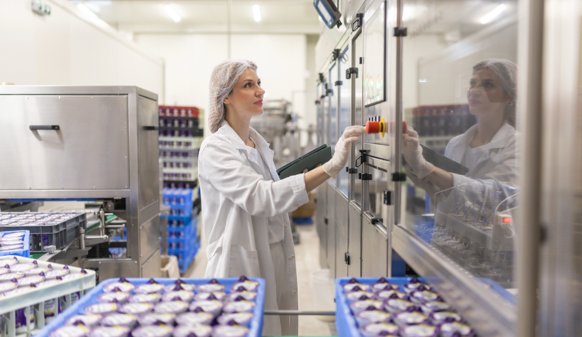
Comprehensive Support for Compliance and Operations
Master Pneumatic supports food and beverage professionals through:
- Regulatory compliance consultation: Guidance on meeting FSMA, FDA, and NSF requirements
- Air quality testing protocols: Specifications for annual (or more frequent) monitoring
- Documentation services: Complete packages supporting FDA audits
- Technical training: Staff education on system operation and maintenance
- Emergency support: Same-day technical assistance for critical production failures
Food and beverage companies benefit from partnering with a manufacturer who understands their regulatory obligations and provides continuous compliance support.
Getting Started With Master Pneumatic Food & Beverage Solutions
Production managers, plant engineers, and food safety directors can begin addressing air quality and system reliability immediately:
- Schedule a Facility Assessment: Master Pneumatic specialists will evaluate current compressed air and gas systems, identify compliance gaps, and recommend improvements aligned with FSMA and FDA requirements.
- Verify Regulatory Compliance: We provide FSMA 11.5.5 compliance verification, recommend appropriate ISO 8573 classes, and develop testing protocols meeting minimum annual requirements.
- Implement Air Quality Monitoring: We help establish regular air quality testing (minimum annual, typically semi-annual for beverage applications) and create documentation supporting audit readiness.
- Upgrade System Reliability: Many food facilities can reduce maintenance 40-60% while improving production consistency by upgrading to properly sized and configured FRL systems with precision regulation and controlled lubrication.
- Standardize Across Production Lines: We develop standardized specifications for CO₂, nitrogen, and air systems, simplifying maintenance and spare parts management across your facility.
Frequently Asked Questions About Food & Beverage Pneumatic Systems
Maintaining air and gas quality in food and beverage facilities requires technical precision. Here are the most common questions our specialists address:
-
Q: What does FSMA 11.5.5 really require for compressed air quality?
-
Q: Why do CO₂ regulators freeze up, and how does Master Pneumatic solve this?
A: When CO₂ expands rapidly through a regulator from high pressure (500+ PSI) to low pressure (50 PSI), it cools significantly—potentially below the frost point. If moisture is present in the gas, it condenses and freezes, blocking the regulator outlet. This freeze-up completely interrupts beverage dispensing. Master Pneumatics’ coalescing filters and desiccant dryers remove moisture vapor before it can condense and freeze. We achieve ISO 8573 Class 2 dew point (-40°C minimum), ensuring CO₂ can expand without freeze-up across all normal operating temperatures.
-
Q: What's the difference between ISO 8573 Class 2 and Class 3, and which should our food facility use?
A: Class 2 allows particles ≤4 microns, dew point ≤-40°C, and oil ≤0.1 mg/m³. Class 3 is slightly more permissive (6 microns, -25°C dew point, 0.5 mg/m³ oil). For beverage dispensing and ice production, we recommend Class 2—the difference in equipment and cost is minimal, and Class 2 provides better protection against moisture-related issues. For general processing line actuators (where air doesn't touch food), Class 3 is often acceptable. For dry-ice systems, Class 1 is preferred. Your risk assessment should guide the choice, but Class 2 is the industry baseline for food-contact applications.
-
Q: Does FSMA require specific testing frequency, or is annual testing sufficient?
A: FSMA 11.5.5.2 specifies "at a minimum annually," but the frequency should be "risk-based." For beverage operations where air quality directly impacts product characteristics, semi-annual or quarterly testing is industry standard. Many manufacturers test after seasonal transitions (spring/fall) when moisture levels change. The key requirement is that testing results be documented and show air quality appropriate to your product. Master Pneumatic helps facilities establish risk-based testing protocols meeting FSMA intent while managing testing costs.
-
Q: Can NSF/ANSI 51 components be retrofitted into existing systems, or do we need complete replacement?
A: NSF/ANSI 51 certification applies to specific components in specific applications—it's product-specific, not universal. Master Pneumatic works with food facilities to identify which components require NSF certification (those touching food or food-contact surfaces) and which don't. Often, strategic component upgrades to NSF-certified parts achieve compliance without complete system replacement, reducing capital requirements.
-
Q: How much can precision lubrication (Serv-Oil) really reduce maintenance and equipment costs?
A: Field data consistently shows that converting from traditional mist lubrication to Serv-Oil precision injection extends pneumatic equipment life 2.5-3x—from 3-5 years to 8-12 years. Since processing line actuators and valves represent significant capital investment, this life extension translates to 50-90% maintenance cost reduction over the equipment lifecycle. For facilities operating hundreds of pneumatic components continuously, the total cost of ownership improvement is substantial—often exceeding $50,000-100,000 annually in larger operations.
-
Q: What should we do if our air quality testing fails to meet required standards?
A: Air quality failures typically indicate insufficient filtration or moisture removal. A system assessment should be conducted, identifying the root cause—often undersized filters accumulating contaminants, or missing desiccant dryers allowing moisture condensation. Solutions usually involve upgrading filter elements, adding or replacing desiccant dryers, or both. Master Pneumatic provides specific upgrade recommendations with cost-benefit analysis, helping facilities achieve compliance cost-effectively.
Contact Master Pneumatic for Your Food & Beverage Pneumatic Needs
Food and beverage professionals rely on Master Pneumatic for solutions addressing the complete spectrum of pneumatic system challenges—from regulatory compliance and safety to efficiency optimization and cost reduction.
Whether you're responsible for beverage carbonation systems, ice manufacturing facilities, dry-ice cleaning operations, processing line automation, or specialty gas blending systems, Master Pneumatics’ expertise and proven solutions can help you achieve cleaner air, safer operations, extended equipment life, and regulatory confidence.
Contact us to discuss your specific needs and discover how precise air preparation and specialized gas regulation can improve product consistency, reduce maintenance costs, and ensure FSMA and FDA compliance.
Master Pneumatic: The Trusted Name in Food & Beverage Air Preparation Solutions
75+ Years of Engineering Excellence | FDA & FSMA Compliant | NSF/ANSI 51 Certified | ISO 8573 Verified | Food Safety Through Precision Air Preparation